Emerald Ash Borer (EAB)

One of the big stories in Oregon this year has been the discovery of the Emerald Ash Borer (EAB) in many parts of the state.
We have been noticing sickly ash trees ever since the ice storm, and chalked it up to drought and disaster taking its toll. Turns out the EAB has been infesting our woodland for a few years.
Our CREP advisors came out and found affected trees, later confirmed by the Oregon Department of Agriculture (ODA). We’ve become so used to the knowledge it would be here eventually, it was more of a head shake than a shock.

I’d estimate that ash represents about one third of hardwoods here on the farm. Their winsome canopies and golden fall color delight us, so we will miss them. Their place in the ecosystem is unique and irreplaceable. We will hope to find other trees to take their place, but nothing will mend the gap they leave.

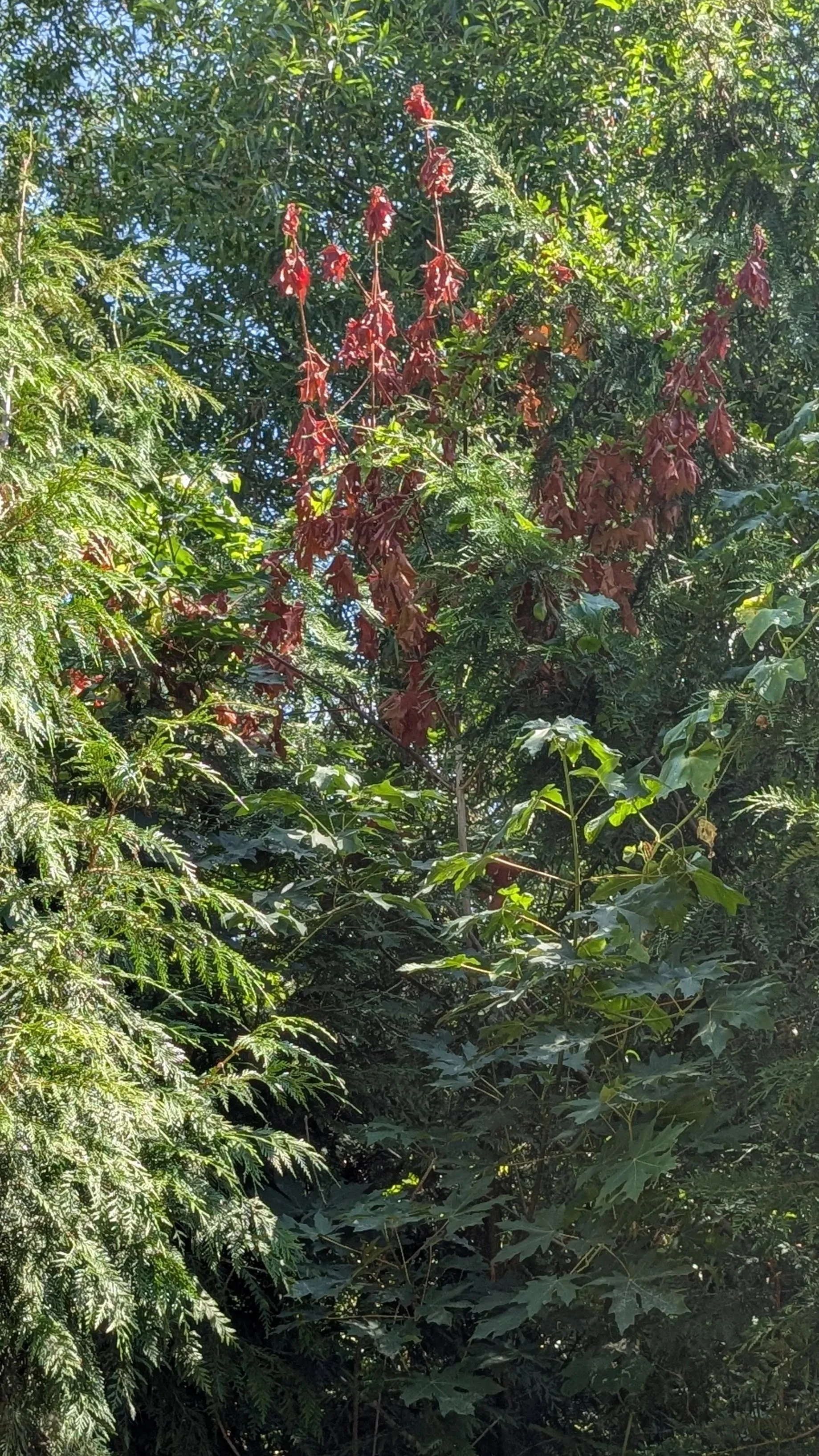
At least the big leaf maples are plentiful. But they are also in trouble. This year we noticed young maples dying rapidly. The experts don’t know what is going on. They are seeing big leaf maples dying off all over the Northwest, and can’t identify what is causing it.

One hopeful development came through the ODA. They have been busy testing a parasitic wasp that keeps the EAB under control in Asia, and soon after our infestation was identified, ODA came out and started releasing the wasps. I had an interesting walk through the woods with them, asking questions and helping with the release.

The wasps won’t hurt anything but EAB. They are tiny and delicate. How those fragile insects inject their eggs through tree bark and into EAB larvae —- is simply incredible.

And also, there’s been a proliferation of woodpeckers in the last few years. That should have been a clue! I was delighted to find woodpeckers living in my favorite giant ash tree. Turns out they love EAB for lunch.

I’m cautioned not to be too optimistic. The infested trees won’t survive. But maybe the wasps will naturalize and thrive, and we’ll eventually reach a stasis where our trees can grow again.

In the meantime, the woods are still beautiful. This autumn we had waves of orange and gold, and the walking path was a foot deep in crunchy leaves.
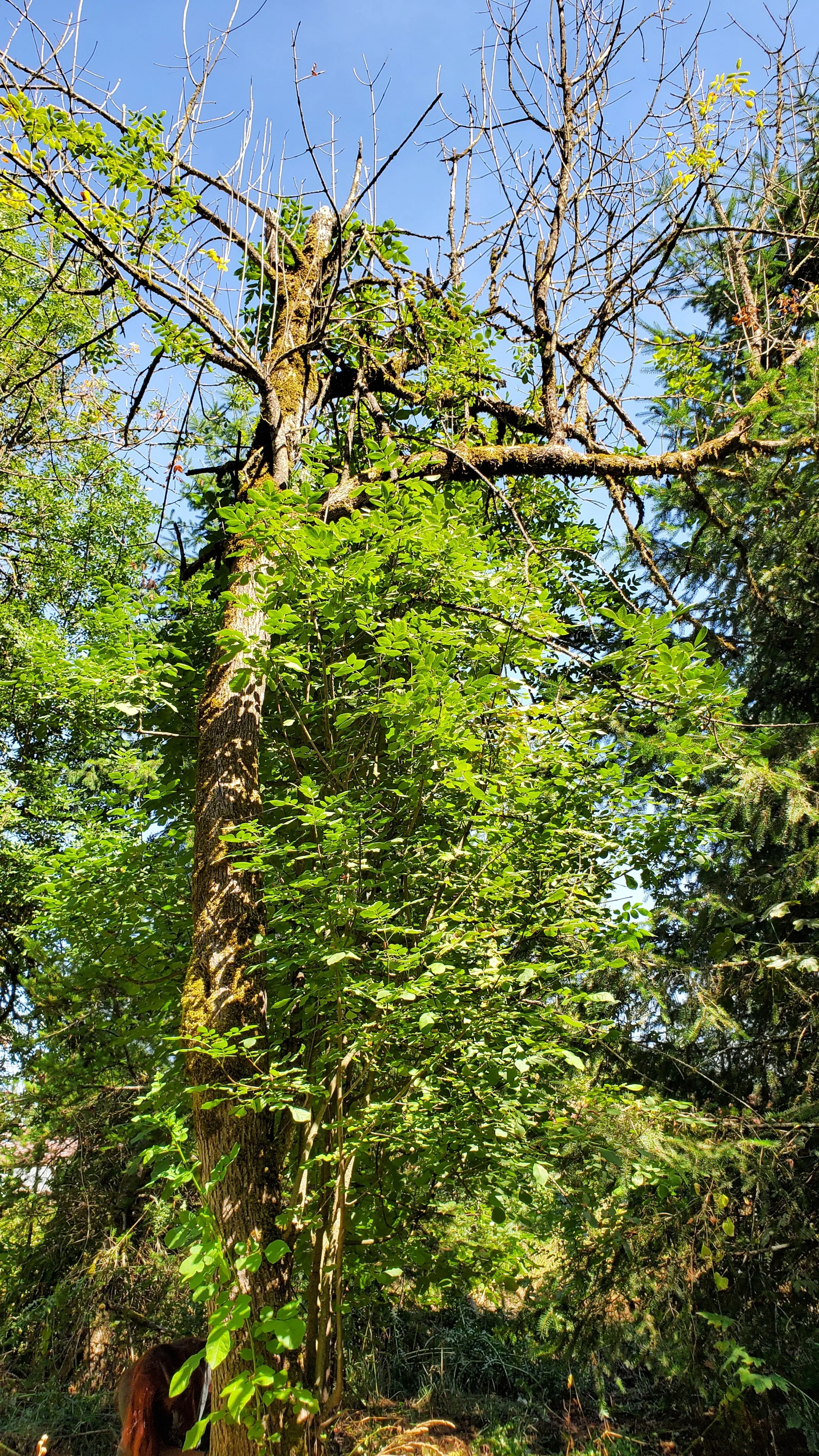
Ash tree infested with EAB showing classic crown death and suckering response.
Ash tree infested with EAB showing classic crown death and suckering response.

Bigleaf maple die off in Oregon, crown damage.

Young bigleaf maple: the top third going from healthy leaves to brown in days, and on inspection, the bark is peeling and the top third of the tree is dead.
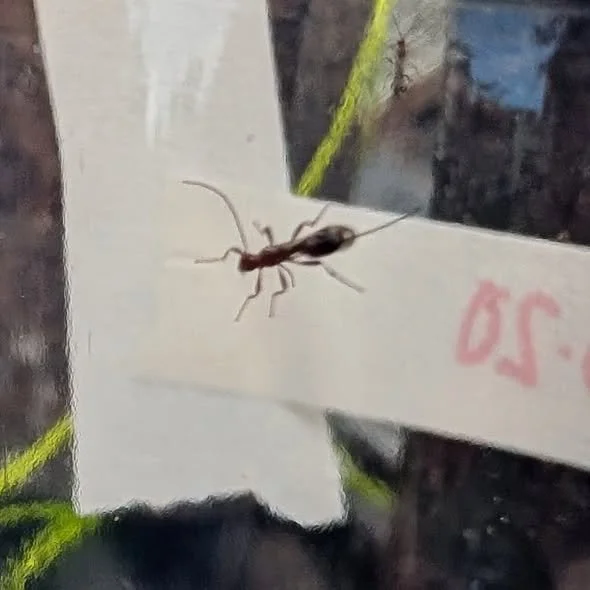
Parasitic wasp to fight EAB.

Parasitic wasp to fight EAB. The tiny wings are transparent and didn’t show up in this photo.
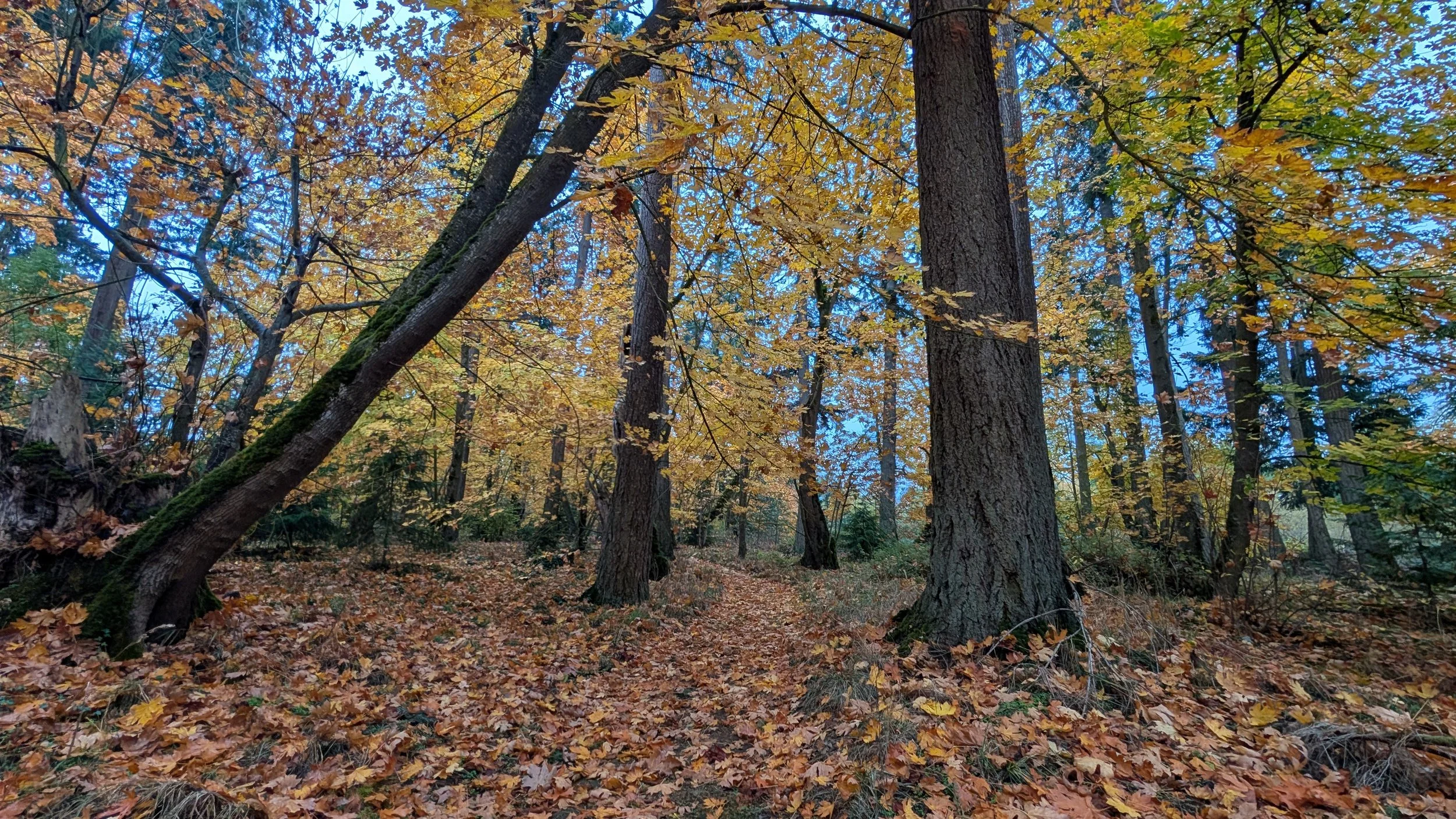
Big leaf maples and Oregon Ash glowing gold.

Kindred Woods walking trail November 2025. Big leaf maples and Oregon Ash glowing gold.

CREP Program: Natural Disasters and Climate Change

CREP Program: Natural Disasters and Climate Change

It’s been fifteen years since we started our CREP conservation program, and every year has brought new challenges. In 2020 Climate Change became more than a theory… This year we have taken up the mission with renewed purpose. We are re-planting with an eye to what will survive in a hotter, unpredictable future, introducing greater diversity for habitat, and with the hope that some will ease the transition into the woodland to come.

Planting Trees to Save the Woods

Planting Trees to Save the Woods

Over a thousand Western Red Cedar and hundreds of Douglas Fir and Valley Pine were set in, along with understory trees and shrubs like vine maple, ninebark and spirea. The race was on for the sunlight. As our seedlings grew, they would create shade, and eventually their expanding branches would connect, forming a “closed canopy”, which in theory would suffocate the light hungry invasive species below. In the meantime, we had several years of battle ahead of us.

Invasive Weed Removal: CREP Program Year One

Invasive Weed Removal: CREP Program Year One

The first year of our CREP program was devoted to clearing the invasives. Because the program shared the cost of hiring brush clearing contractors, the worst areas were cleared in a matter of days by heavy equipment. While the contractors cleared the larger areas, there were hundreds of individual trees that had to be saved by hand, one by one. With clippers and machetes, we spent most of that year pulling clematis out of trees and whacking at the blackberries.

Financial Help through the CREP Program

Financial Help through the CREP Program

I found the resources we needed in our county soil and water conservation district. There are various programs offering assistance to property owners who want to “do the right thing” for the environment, and we chose to enroll our woods in the CREP program. CREP aims to improve water quality and improve wildlife habitat by establishing long term riparian buffers.

Saving the woods

Saving the woods

It seemed too late for our sad little woods. Entire trees towering 100 feet in the air were completely suffocated with thick wild clematis. Others were being slowly strangled by English Ivy. Thorny walls of Himalayan Blackberry 12 feet high made much of the woods impenetrable. Ever have a deep heart wish for something impossible? Every once in awhile, impossible things become possibilities.